
Tuesday, 31 May 2011
Putin
Found this picture online.. something similar to what I wanted to make in my collage last year.


Monday, 30 May 2011
Sohei Nishino
Born in Hyogo in 1982. Since he was a university student of Osaka University of Arts, he started his series Diorama Map which is created from his memory as layered icons of the city.
The creation of a Diorama Map takes the following method; Walking around the chosen city on foot; shooting from various location with film; pasting and arranging with enormous mound of pieces. Consisted from eight cities, Diorama Map is still ongoing and will be developed in cities all over the world in the future.
Since selected as an Excellence Award of Canon New Cosmos Photography Award, he has participated in several group shows including his solo exhibition. His works are shown at Paris Photo 2009 where he received critical acclaim by many collectors and attracts people all over the world.


The creation of a Diorama Map takes the following method; Walking around the chosen city on foot; shooting from various location with film; pasting and arranging with enormous mound of pieces. Consisted from eight cities, Diorama Map is still ongoing and will be developed in cities all over the world in the future.
Since selected as an Excellence Award of Canon New Cosmos Photography Award, he has participated in several group shows including his solo exhibition. His works are shown at Paris Photo 2009 where he received critical acclaim by many collectors and attracts people all over the world.


Wednesday, 25 May 2011
Dziga Vertov
David Kaufman (Russian: Давид А́белевич Кауфман) (2 January 1896 – 12 February 1954), better known by his pseudonym Dziga Vertov (Russian: Дзига Вертов), was a Soviet pioneer documentary film, newsreel director and cinema theorist. His filming practices and theories influenced the Cinéma vérité style of documentary moviemaking and, in particular the Dziga Vertov Group active in the 1960s.
Tuesday, 24 May 2011
Title Ideas
Also! Thinking about possible titles for the project I found this quote by Winston Churchill
"Russia is a riddle wrapped in a mystery inside an enigma"
Then theres obviously the really famous poem by Fyodor Tyutchev
Умом Россию не понять,
Аршином общим не измерить:
У ней особенная стать —
В Россию можно только верить.
This english translation isn't that great:
You wouldn't understand Russia just using the intellect
You couldn't measure her using the common scale
She has a special kind of grace
You can only believe in her.
"Russia is a riddle wrapped in a mystery inside an enigma"
Then theres obviously the really famous poem by Fyodor Tyutchev
Умом Россию не понять,
Аршином общим не измерить:
У ней особенная стать —
В Россию можно только верить.
This english translation isn't that great:
You wouldn't understand Russia just using the intellect
You couldn't measure her using the common scale
She has a special kind of grace
You can only believe in her.
David Anthony Hall
Was walking around marylebone today and stumbled upon this gallery that was showing David Anthony Hall's landscape photographs. Most of them are panoramic shots but some are exhibited in these circular shapes. Thought they would be relevant to Svetlana's project.
Here is the website of the photographer:
http://www.photohall.com/
And here is the website of the gallery:
http://thompsonsgallery.co.uk/
Here is the website of the photographer:
http://www.photohall.com/
And here is the website of the gallery:
http://thompsonsgallery.co.uk/


Russia: The Wild East
BBC programme about Russia by Martin Sixsmith.
Theres lots of different topics and I'm currently reading his book which I think is just basically the same thing as the main programme. Interesting read and very relevant in the understanding of Russia and its culture for the "West".
the programme:
http://www.bbc.co.uk/programmes/b010v6p3
http://www.bbc.co.uk/programmes/b010v6p3
and the book:
http://www.amazon.co.uk/Russia-000-Year-Chronicle-Wild-East/dp/1849900728/ref=sr_1_1?ie=UTF8&qid=1306234055&sr=8-1

Rafal Milach
The polish photographer I talked about in the last tutorial.
He has a lot more work on his website and quite a lot of it is about Russia.
http://www.rafalmilach.com/


Monday, 23 May 2011
Regina Gallery
Russian Gallery in London
22 Eastcastle Street
London, W1W 8DE, United Kingdom
Tel. +44 (0)207 636 7768
london@reginagallery.com
22 Eastcastle Street
London, W1W 8DE, United Kingdom
Tel. +44 (0)207 636 7768
london@reginagallery.com
Sunday, 22 May 2011
Calvert 22
http://www.calvert22.org/
Another gallery dealing with Russian artists.
There's currently an exhibition on that I think it would be useful to see!
http://www.timeout.com/london/art/event/219118/practice-for-everyday-life-young-artists-from-russia
Thursday, 19 May 2011
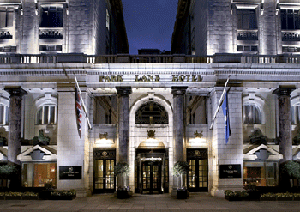
Russian Art Fair 2011
Private View
Wednesday 9th June 6pm to 9:30pm
Charity Gala Evening
Friday 11th June from 6pm
Public Days
Thursday 11am-6, Friday 11am-5 Saturday 11am-6pm
The Park Lane Hotel
Piccadilly, Mayfair
London, W1J 7BX
http://youtu.be/O0103fTnQsM
Tuesday, 17 May 2011
Pushkin House London
Pushkin House has been established to serve as a home and dedicated showcase for Russian culture in London, a focus for Anglo-Russian cultural exchange, a provider of education and information on Russian language and culture, a resource and networking centre for individuals and institutions.
In pursuit of these aims, Pushkin House has developed a lively and varied cultural programme on Russian literature, art, film, music, theatre and dance, as well as history, philosophy and politics. Events include lectures and talks, seminars, conferences, exhibitions, films, concerts and readings.
The House also has its own reference library of Russian culture.
Besides its own events, Pushkin House welcomes and encourages collaboration with other institutions and groups dedicated to Russian culture. The House currently hosts lectures run by the Pushkin Club and the GB-Russia Society. Regular Russian language courses are provided by the Russian Language Centre. Creative partnerships are being established with major museums and libraries in Russia.
Learn more about the TRUSTEES of Pushkin House by clicking here
Pushkin House is owned and run by the Pushkin House Trust, Registered Charity no. 313111.
http://www.pushkinhouse.org/en
Sunday, 15 May 2011
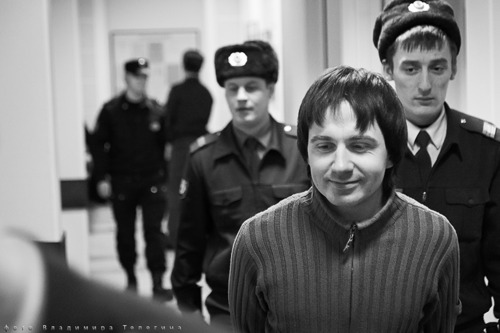
Boris Mikhailov
Boris Andreyevich Mikhailov (Бори́с Андрі́йович Миха́йлов, born August 25, 1938 in Kharkov, Ukraine) is a fine art photographer who has been described as one of the most important artists to have emerged from the former USSR. He was twice nearly imprisoned by the KGB.
Born in the former Soviet Union, he lived and worked for several decades in his hometown Kharkiv, Ukraine. He received an education as an engineer and started to teach himself the practice of photography. Today he is one of the most successful and well-known photographers, who already was actively working in soviet times. His work very much is influenced in the means of Concept-Art and social documentary photography. At the end of the 1960s he had his first exhibition. After the KGB found nude pictures of his wife he was set off his job as an engineer and started to full-time work with photography. He shot a series of everyday-life scenes-documentation. His most famous work during this period (1968–1975) was the "Red Serie". In these photographs he mainly used the colour red, to picture people, groups and city-life. Red is the color standing for October Revolution, political party and the social system of soviet society. It is often said, that within those works critical elements toward the existing political circumstances can be found.


In his work Klebrigkeit (1982) he added explaining notes, or he is using diary-like writings. As an important part of contemporary art are considered his works "Case History". Here he examines the consequences of the breakdown of the Soviet Union for the people living there. Therefore he systematically took pictures of homeless people, who soon started trusting him. More than 500 photographs show the situation of people, who after the breakdown of the Soviet Union were not able to catch hold in a secured social system. In a very direct way Mikhailov points out his critique against the "mask of beauty" of the uprising post-soviet capitalistic way of life. It is one of the best works found within social documentary photography.
In 2004 Boris Mikhailov exhibited a first series of Berlin. Again his attention is drawn to people living at the edge of society.
Born in the former Soviet Union, he lived and worked for several decades in his hometown Kharkiv, Ukraine. He received an education as an engineer and started to teach himself the practice of photography. Today he is one of the most successful and well-known photographers, who already was actively working in soviet times. His work very much is influenced in the means of Concept-Art and social documentary photography. At the end of the 1960s he had his first exhibition. After the KGB found nude pictures of his wife he was set off his job as an engineer and started to full-time work with photography. He shot a series of everyday-life scenes-documentation. His most famous work during this period (1968–1975) was the "Red Serie". In these photographs he mainly used the colour red, to picture people, groups and city-life. Red is the color standing for October Revolution, political party and the social system of soviet society. It is often said, that within those works critical elements toward the existing political circumstances can be found.


In his work Klebrigkeit (1982) he added explaining notes, or he is using diary-like writings. As an important part of contemporary art are considered his works "Case History". Here he examines the consequences of the breakdown of the Soviet Union for the people living there. Therefore he systematically took pictures of homeless people, who soon started trusting him. More than 500 photographs show the situation of people, who after the breakdown of the Soviet Union were not able to catch hold in a secured social system. In a very direct way Mikhailov points out his critique against the "mask of beauty" of the uprising post-soviet capitalistic way of life. It is one of the best works found within social documentary photography.
In 2004 Boris Mikhailov exhibited a first series of Berlin. Again his attention is drawn to people living at the edge of society.


Saturday, 14 May 2011
Sony World Photography Awards Exhibition

I've just visited sony WPA Exhibition and it was amazing!
London’s biggest ever festival of photography opens at Somerset House on 26 April. Following stops in San Francisco, Sao Paulo and Shanghai, the World Photography Festival comes to London for the first time and will run until 1 May. The Sony World Photography Awards Winners’ Showcase and Bruce Davidson exhibitions will be on display until 22 May. A private press preview of these exhibitions will take place on Tuesday 26 April at 12noon.
The inspiring and eclectic six day programme of events will celebrate the very best in photography from around the world and will appeal to everyone with a passion for photography from professionals to the photo-loving public alike.
The festival will feature celebrated photographers such as Tom Stoddard, Carol Allen Storey and Bruce Davidson as well as Pulitzer prize winning photographer Liu Hueng Shing and industry leaders such as Elisabeth Biondi (Visuals Editor, New Yorker) and Mike Trow (Photo Editor, British Vogue) – all of whom will gather at the festival to host exhibitions, talks, screenings, portfolio reviews, workshops and more.
Friday, 13 May 2011
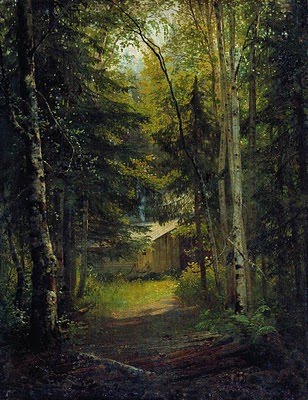
Ivan Ivanovich Shishkin
Ivan Ivanovich Shishkin (Russian: Ива́н Ива́нович Ши́шкин; 25 January 1832 – 20 March 1898) was a Russian landscape painter closely associated with the Peredvizhniki movement.
Shishkin was born in Yelabuga of Vyatka Governorate (today Republic of Tatarstan), and graduated from the Kazan gymnasium. Then he studied at the Moscow School of Painting, Sculpture and Architecture for 4 years, attended the Saint Petersburg Imperial Academy of Arts from 1856 to 1860,which he graduated with the highest honours and a gold medal. He received the Imperial scholarship for his further studies in Europe. Five years later Shishkin became a member of the Imperial Academy in St. Petersburg and was professor of painting from 1873 to 1898. At the same time, Shishkin headed the landscape painting class at the Highest Art School in St. Petersburg.

For some time, Shishkin lived and worked in Switzerland and Germany on scholarship from the St. Petersburg Imperial Academy of Arts. On his return to Saint Petersburg, he became a member of the Circle of the Itinerants and of the Society of Russian Watercolorists. He also took part in exhibitions at the Academy of Arts, the All Russian Exhibition in Moscow (1882), the Nizhniy Novgorod (1896), and the World Fairs (Paris, 1867 and 1878, and Vienna, 1873). Shishkin's painting method was based on analytical studies of nature. He became famous for his forest landscapes, and was also an outstanding draftsman and a printmaker.
Ivan Shishkin owned a dacha in Vyra, south of St. Petersburg. There he painted some of his finest landscapes. His works are notable for poetic depiction of seasons in the woods, wild nature, animals and birds. He died in 1898, in St. Petersburg, Russia, while working on his new painting.
A minor planet 3558 Shishkin, discovered by Soviet astronomer Lyudmila Zhuravlyova in 1978 is named after him.


Shishkin was born in Yelabuga of Vyatka Governorate (today Republic of Tatarstan), and graduated from the Kazan gymnasium. Then he studied at the Moscow School of Painting, Sculpture and Architecture for 4 years, attended the Saint Petersburg Imperial Academy of Arts from 1856 to 1860,which he graduated with the highest honours and a gold medal. He received the Imperial scholarship for his further studies in Europe. Five years later Shishkin became a member of the Imperial Academy in St. Petersburg and was professor of painting from 1873 to 1898. At the same time, Shishkin headed the landscape painting class at the Highest Art School in St. Petersburg.

For some time, Shishkin lived and worked in Switzerland and Germany on scholarship from the St. Petersburg Imperial Academy of Arts. On his return to Saint Petersburg, he became a member of the Circle of the Itinerants and of the Society of Russian Watercolorists. He also took part in exhibitions at the Academy of Arts, the All Russian Exhibition in Moscow (1882), the Nizhniy Novgorod (1896), and the World Fairs (Paris, 1867 and 1878, and Vienna, 1873). Shishkin's painting method was based on analytical studies of nature. He became famous for his forest landscapes, and was also an outstanding draftsman and a printmaker.
Ivan Shishkin owned a dacha in Vyra, south of St. Petersburg. There he painted some of his finest landscapes. His works are notable for poetic depiction of seasons in the woods, wild nature, animals and birds. He died in 1898, in St. Petersburg, Russia, while working on his new painting.
A minor planet 3558 Shishkin, discovered by Soviet astronomer Lyudmila Zhuravlyova in 1978 is named after him.


Subscribe to:
Posts (Atom)